






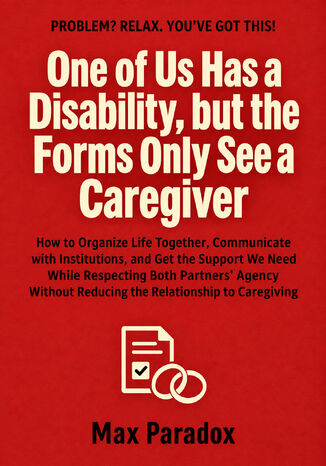
One of Us Has a Disability, but the Forms Only See a Caregiver - How to Organize Life Together, Communicate with Institutions, and Get the Support We Need While Respecting Both Partners' Agency Without Reducing the Relationship to Caregiving Max Paradox
 angielski
- Autor:
- Max Paradox
- Wydawnictwo:
- SELF-PUBLISHER
- Ocena:
- Stron:
- 221
- Dostępne formaty:
-
PDFePub
-
 Publikacja stworzona ze wsparciem AI
Opis
książki
:
One of Us Has a Disability, but the Forms Only See a Caregiver - How to Organize Life Together, Communicate with Institutions, and Get the Support We Need While Respecting Both Partners' Agency Without Reducing the Relationship to Caregiving
You're partners in life. Unfortunately, the paperwork has decided that one of you is a caregiver and the other is a full-time responsibility. Apparently, love now requires an administrative job title.
When one partner has a disability, everyday life can involve additional planning, practical assistance, inaccessible services, and conversations with institutions that seem determined to misunderstand your relationship.
One person is addressed as the caregiver. The other becomes the person being cared for. Somewhere between the appointments, forms, and endless phone calls, two independent personalities risk disappearing behind a convenient pair of labels.
But your relationship is not a care facility. And neither of you signed up to become the permanent administrator of somebody else's existence.
In One of Us Has a Disability, but the Forms Only See a Caregiver, Max Paradox tackles the practical and emotional challenges of organizing life together while respecting both partners' agency, preferences, responsibilities, and personal ambitions.
With sharp observational humor, realistic examples, and down-to-earth guidance, this book explores how couples can manage necessary support without allowing assistance to turn into control or ordinary partnership into an endless administrative assignment.
Inside, you'll discover how to:
Distinguish helpful assistance from making decisions on someone else's behalf.
Communicate with healthcare providers, public institutions, and service organizations without allowing one partner's voice to disappear.
Share household responsibilities and financial decisions while respecting different abilities and resources.
Establish personal boundaries without treating every disagreement as a failure of love.
Find and organize outside support without inviting your entire extended family to manage your private life.
Make your home and everyday routines more accessible and practical.
Navigate changing support needs, unexpected disruptions, and situations where the usual arrangements stop working.
Recognize the difference between genuine safety concerns and unnecessary restrictions on independence.
Protect privacy, personal freedom, friendships, careers, and ambitions.
Keep your relationship meaningful beyond appointments, paperwork, and practical responsibilities.
This is not a book promising that a positive attitude will make inaccessible buildings accessible or that excellent communication will persuade every institution to cooperate.
Real life contains financial limits, unavailable services, confusing procedures, exhaustion, and problems that no amount of determination can magically remove.
Instead, you'll find useful ways to identify the real problem, ask better questions, make informed decisions, and recognize when professional or external assistance is necessary.
The book also challenges two persistent assumptions: that receiving support means surrendering independence, and that loving someone means providing unlimited assistance without ever needing a break.
Both partners matter. Both have a right to personal goals, boundaries, privacy, and a life that includes something more interesting than discussing next week's appointments.
Whether you live with a disability, support a partner, or want to understand relationships involving disability more thoughtfully, this guide offers practical insight without pity, heroic stereotypes, or unrealistic promises.
Because one of you may need assistance, but neither of you should become a supporting character in your own relationship.
And if the next form still insists that one of you is simply "the caregiver," at least you'll know that a drop-down menu is not qualified to define your love life.
This publication was prepared using tools that support the creative process, including artificial intelligence solutions. The final concept, structure and editing are the responsibility of the author.
Wybrane bestsellery
-
 Mężczyźni często nie mają swojego lekarza kogoś, z kim mogliby porozmawiać o zmianach, których doświadczają wraz z wiekiem. Do gabinetu trafiają dopiero wtedy, gdy organizm zaczyna wyraźnie sygnalizować, że coś jest nie tak. Przez lata wielu z nich słyszało, że prawdziwy mężczyzna powinien być silny, nie narzekać i radzić sobie sam. Prawdziwa siła
-
ebook
-
audiobook
44 pkt
(38,49 zł najniższa cena z 30 dni)
44.99 zł
49.99 zł (-10%) -
-
 Choroby nowotworowe to temat, który dotyka wielu polskich rodzin. Nie bez powodu: 1,47 miliona Polaków żyje z diagnozą onkologiczną, a liczba ta może wzrosnąć o kolejne 15 procent w ciągu najbliższych pięciu lat. Dlatego tak ważne jest, aby wiedza dotycząca raka i możliwości leczenia była powszechna.
-
ebook
-
książka
36 pkt
(33,50 zł najniższa cena z 30 dni)
36.84 zł
67.00 zł (-45%) -
-
 Łącząc neuronaukę, psychosomatykę i medycynę stylu życia, dr Asia Wojsiat pokazuje, jak w świecie nadmiaru stworzyć mózgowi warunki do regulacji, skupienia i odpoczynku. Żyjemy w nadmiarze bodźców, obowiązków i porad, podczas gdy naszym mózgom coraz trudniej jest wrócić do równowagi. Doktor Asia Wojsiat łączy neuronaukę, psychosomatykę i medycynę s
-
ebook
58 pkt
(59,65 zł najniższa cena z 30 dni)
58.50 zł
79.91 zł (-27%) -
-
 MIĘDZYNARODOWY BESTSELLER, DZIĘKI KTÓREMU ODZYSKASZ SPOKÓJ I ODNAJDZIESZ UKOJENIE. Osiem milionów dróg do szczęścia to drogowskaz na czasy, w których każdy z nas poszukuje ukojenia. Hiroko Yoda zaprasza cię do świata uważności, czerpiąc z uzdrawiającej mądrości japońskiej kultury i tradycji. Zainspirowana buddyzmem, mądrością shugendo czy mistycyzm
-
ebook
-
audiobook
42 pkt
(32,90 zł najniższa cena z 30 dni)
42.32 zł
52.90 zł (-20%) -
-
 Serce to nie tylko mięsień. To centrum dowodzenia całym twoim życiem. Czy serce naprawdę ma ograniczoną liczbę uderzeń? Czy można zużyć organizm aktywnością fizyczną? Skąd bierze się kołatanie serca i kiedy powinno niepokoić? Dlaczego mieszkańcy Sardynii żyją dłużej i co wspólnego mają z nami łowcy-zbieracze z epoki kamienia? Kardio to nowoczesna
-
ebook
35 pkt
(33,80 zł najniższa cena z 30 dni)
35.12 zł
43.90 zł (-20%) -
-
 Walka z chorobą nowotworową to wielki wysiłek dla organizmu. Holistyczne podejście do pacjenta może zwiększyć skuteczność konwencjonalnego leczenia! Książka "Rewolucja w leczeniu raka" to kompendium wiedzy na temat kompleksowego wspierania organizmu podczas zmagań z chorobą. Autorka, doktor Leigh Erin Connealy, to jedna z najbardziej znanych osób w
-
ebook
40 pkt
(38,34 zł najniższa cena z 30 dni)
40.60 zł
58.99 zł (-31%) -
-
 Poczucie bezpieczeństwa to nie cecha osobowości, lecz umiejętność, którą można rozwijać i wzmacniać Choć od dzieciństwa uczy się nas samowystarczalności i niezależności, nasz układ nerwowy jest zaprogramowany na tworzenie ciepłych, stabilnych więzi. To na nich opiera się nasze poczucie bezpieczeństwa, niezbędne do prowadzenia spełnionego i spokojne
-
ebook
38 pkt
(38,49 zł najniższa cena z 30 dni)
38.99 zł
49.99 zł (-22%) -
-
 Zmagasz się z wybuchami złości, impulsywnością lub paraliżującym lękiem? Terapia dialektyczno-behawioralna to skuteczna metoda, która pomoże ci odzyskać stabilność. W przeciwieństwie do kosztownych, wielomiesięcznych sesji, ten innowacyjny zeszyt ćwiczeń oferuje ustrukturyzowany, samodzielny program na 3 miesiące. Poradnik opracowany przez certyfik
-
ebook
34 pkt
(28,90 zł najniższa cena z 30 dni)
34.58 zł
39.30 zł (-12%) -
-
 Żyjesz w ciągłym stresie i masz problemy ze snem? Odkryj, jak wyciszyć nerw błędny, aby uwolnić ciało od lęku. Ten ebook to nie tylko sucha teoria, ale unikalny, gotowy program samoregulacji. W przeciwieństwie do innych poradników, oferuje ci kompletny zestaw narzędzi: ćwiczenia oddechowe, jogę, medytacje oraz dostęp do nagrań audio i zeszytu ćwicz
-
ebook
29 pkt
(24,90 zł najniższa cena z 30 dni)
29.89 zł
34.30 zł (-13%) -
-
 Chcesz rozpocząć przygodę z wykrywaczem metali, ale nie wiesz, od czego zacząć? A może od lat przeczesywanie pól i lasów z cewką to Twoja pasja i chcesz wejść na wyższy poziom poszukiwań? Dobrze się składa trzymasz bowiem w ręku warsztatowy przewodnik po świecie współczesnej detektorystyki, oparty na kompetencjach zdobywanych przez autora podczas tysięcy godzin spędzonych w terenie. Ta książka to praktyczna wiedza bez zbędnej teorii. Prawdziwe doświadczenia bez internetowych mitów. Konkrety bez lania wody.
-
ebook
-
książka
29 pkt
(27,90 zł najniższa cena z 30 dni)
29.95 zł
59.90 zł (-50%) -

Max Paradox - pozostałe książki
-
 W poniedziałek kupujesz nowy planer. We wtorek masz już idealnie rozpisane obowiązki. W środę odkrywasz kilka drobnych opóźnień. W czwartek planer leży zamknięty, a ty szukasz aplikacji, która tym razem naprawdę odmieni twoje życie. Brzmi znajomo? Witaj w klubie ludzi, którzy potrafią zaprojektować genialny system organizacji, ale później muszą jes
-
ebook
23 pkt
(5,00 zł najniższa cena z 30 dni)
23.99 zł
29.99 zł (-20%) -
-
 Masz w ręku orzeczenie dotyczące potrzeb edukacyjnych swojego dziecka. Dokument został przygotowany przez specjalistów, zawiera zalecenia i powinien pomagać w organizacji odpowiedniego wsparcia. Teoretycznie wszystko jest jasne. W praktyce szkoła ma własną interpretację, nauczyciele zapewniają o indywidualnym podejściu, a ty po raz kolejny zastanaw
-
ebook
29 pkt
-
-
 Mieszkasz w TBS-ie, regularnie płacisz czynsz, kiedyś wpłaciłeś partycypację, a mimo to nadal nie do końca rozumiesz, za co właściwie płacisz i jakie masz prawa? Witaj w świecie, w którym mieszkanie jest twoim domem, ale nie twoją własnością, a odpowiedź na proste pytanie potrafi wymagać przeczytania kilku umów, trzech regulaminów i wiadomości od a
-
ebook
29 pkt
-
-
 Kiedyś wystarczyło spojrzeć na opakowanie, żeby przeczytać instrukcję. Dziś potrzebujesz okularów, odpowiedniego oświetlenia, trzech prób ustawienia przedmiotu i cierpliwości godnej archeologa rozszyfrowującego starożytne pismo. Telefon ma ekran o imponującej rozdzielczości, ale niektóre przyciski nadal wyglądają jak ziarenka maku. Dokumenty zawier
-
ebook
29 pkt
-
-
 Twoje dziecko ma alergię. Ty masz zalecenia od lekarza, plan bezpieczeństwa i oczy dookoła głowy. A cała reszta świata ma dla ciebie dobrą radę, domowe ciasteczko i zapewnienie, że "od jednego kawałeczka przecież nic się nie stanie". Witaj w rodzicielstwie, w którym zwykły poczęstunek potrafi zamienić się w przesłuchanie dotyczące składników, szkol
-
ebook
29 pkt
-
-
 Kupujesz mieszkanie. Masz umowę, termin odbioru i całkiem rozsądny plan na przyszłość. Potem deweloper informuje, że harmonogram jest "aktualizowany", klucze nadal pozostają w sferze marzeń, a ty zaczynasz sprawdzać pocztę częściej niż prognozę pogody. Witaj w świecie, w którym "już niedługo" potrafi trwać zaskakująco długo. "Mamy Dewelopera, Termi
-
ebook
29 pkt
-
-
 Ojciec znowu się zakochał. On przeżywa drugą młodość, a ty właśnie odkrywasz, że dorosłe dzieci również mogą mieć problem z nową miłością rodzica. Zwłaszcza kiedy nikt nie zapytał, czy masz ochotę występować w tej romantycznej historii. Jeszcze niedawno wszystko było przewidywalne. Wiedziałeś, jak wyglądają rodzinne spotkania, kto organizuje święta
-
ebook
29 pkt
-
-
 Miłość nie zna granic. Niestety, twoja teściowa zna je doskonale i właśnie wyjaśnia, dlaczego tegoroczne święta powinniście spędzić w jej kraju. Twój partner pochodzi z innego kraju? Gratulacje! W pakiecie z miłością otrzymujesz dodatkowy język, zupełnie nowe tradycje, nieznane potrawy i dwie rodziny przekonane, że ich sposób robienia wszystkiego j
-
ebook
29 pkt
-
-
 Samochód został w garażu, kluczyki w szufladzie, a życie najwyraźniej nie otrzymało informacji o zmianie sytuacji. Sklep nadal znajduje się kilkanaście kilometrów od domu. Lekarz przyjmuje w sąsiednim mieście. Przyjaciele zapraszają na spotkania, a autobus kursuje według rozkładu, który wygląda, jakby ktoś ułożył go podczas wyjątkowo złośliwego eks
-
ebook
29 pkt
-
-
 Pierwsze dziecko w rodzinie idzie na studia. Duma jest ogromna. Wiedza o tym, jak działa uczelnia? Niekoniecznie. Nagle przy rodzinnym stole pojawiają się tajemnicze słowa: ECTS, sylabus, sesja, dziekanat, stypendium i warunek. Rodzice próbują zrozumieć akademicką rzeczywistość, dziecko przygotowuje się do samodzielnego życia, a babcia pyta, czy po
-
ebook
29 pkt
-




Szczegóły książki
- ISBN Ebooka:
- 978-83-849-0012-3, 9788384900123
- Data wydania ebooka :
-
2026-11-09
 Data wydania ebooka często jest dniem wprowadzenia tytułu do sprzedaży i może nie być równoznaczna
z datą wydania książki papierowej. Dodatkowe informacje możesz znaleźć w darmowym fragmencie.
Jeśli masz wątpliwości skontaktuj się z nami [email protected].
- Język publikacji:
- angielski
- Rozmiar pliku Pdf:
- 1.3MB
- Rozmiar pliku ePub:
- 2MB
- Pobierz przykładowy rozdział PDF »
- Pobierz przykładowy rozdział EPUB »

self publisher - inne książki
-
 Do świątecznego Leavenworth przyjechała tylko na kilka dni. Festiwal, dopilnowanie szczegółów i powrót do Seattle - taki był plan. Bez komplikacji i bez mężczyzny, który mógłby namieszać jej w głowie. Beckett miał swoje zasady, własny warsztat i zdecydowanie za mało cierpliwości do kobiet takich jak Harper. Los najwyraźniej nie zamierzał się nimi p
-
ebook
35 pkt
-
-
 Na polskiej wsi jeszcze niedawno wiedziano, jak zamówić ból, jak odczynić urok rzucony zazdrosnym spojrzeniem i co położyć pod progiem nowego domu, żeby dobrze się w nim żyło. Ta wiedza nie zniknęła, tylko przycichła, rozproszona w przekazach babek, zapiskach etnografów i zwyczajach, których dziś często nie potrafimy już odczytać. Ta książka zbiera
-
ebook
36 pkt
-
-
 Gdy ginie jedyny syn przywódcy Northern Exchange, przyszłość jednej z najpotężniejszych kanadyjskich formacji mafijnych staje pod znakiem zapytania. Claude Girard ma jednak córkę. I człowieka, którego zamierza uczynić swoim następcą. Dwunastoletnia Claire nie wie jeszcze, że podpisany przez ojca kontrakt odbierze jej dzieciństwo. Zanim zostanie żon
-
ebook
32 pkt
-
-
 Frytkownica beztłuszczowa stoi w wielu polskich kuchniach, ale po kilku miesiącach używania zwykle sprowadza się do trzech, czterech sprawdzonych dań. Ta książka powstała z przekonania, że urządzenie, które potrafi w kwadrans skarmelizować dynię, wysuszyć chipsy z jabłek i wypiec chrupiące sakiewki z grzybami, zasługuje na coś więcej niż odgrzewani
-
ebook
36 pkt
-
-
 Zalecenie lekarza brzmi zwykle krótko: "proszę przejść na dietę lekkostrawną". Bez wyjaśnienia, co to właściwie znaczy, i bez odpowiedzi na pytanie, co w takim razie zjeść dziś na obiad. Ta książka powstała po to, żeby wypełnić tę lukę - jest praktycznym przewodnikiem dla wszystkich, którzy muszą lub chcą odciążyć swój przewód pokarmowy, a nie zami
-
ebook
36 pkt
-
-
 Jak przestać przejmować się opinią innych. Jak słuchać ludzi, nie oddając im kierownicy własnego życia to praktyczny przewodnik dla osób, które chcą lepiej zrozumieć omawiany temat i odzyskać wpływ na codzienne decyzje. Autor wyjaśnia mechanizmy działające w tle, porządkuje najważniejsze pytania i pokazuje konkretne perspektywy bez pustych obietnic
-
ebook
23 pkt
(5,00 zł najniższa cena z 30 dni)
23.99 zł
29.99 zł (-20%) -
-
 Masz w ciele sieć naczyń dłuższą niż wszystkie drogi krajowe razem wzięte, kilkaset stacji filtracyjnych i płyn, który przepływa przez klatkę piersiową w ilości kilku litrów na dobę. I najprawdopodobniej nigdy nie poświęciłeś jej pięciu minut uwagi. W szkole poznałeś serce i płuca. O tym układzie usłyszałeś zdanie, może dwa - najczęściej przy okazj
-
ebook
36 pkt
-
-
 Ostatni tom serii Sanctuary! On - poważny prawnik i członek klubu Sanctuary. Ona - córka konserwatywnego teleewangelisty. Pechowo - przyszła synowa jego wroga. Daisy Bell ma zaplanowaną przyszłość. Jej rolą jest ładnie wyglądać, szczerze się modlić i wspierać rodzinę przyszłego męża w dążeniu do zdobycia władzy. Wszystko się zmienia, gdy odkrywa
-
ebook
30 pkt
-
-
 CZY PROBLEMEM SĄ IDIOCI U WŁADZY - CZY SYSTEM, KTÓRY ICH PRODUKUJE? 8 listopada 2016 roku świat zamarł. Potem był Brexit, Węgry, Brazylia, Polska. Za każdym razem pojawiało się to samo pytanie: jak to możliwe? Autor stawia tezę, która zmienia perspektywę: złych liderów nie produkują po prostu źli ludzie. Produkują ich określone warunki - rozpad wsp
-
ebook
19 pkt
-
-
 A co, jeśli najsurowszy sędzia w Twojej głowie... wcale nie mówi Twoim głosem? Przez niemal cztery dekady John Mark Linden-ceniony coach, menedżer i wykładowca akademicki - perfekcyjnie żonglował maskami sukcesu. Wierzył, że ludzką naturę można w pełni skontrolować chłodnym, czystym intelektem. Wszystko pękło w jeden wieczór przy kuchennym stole, g
-
ebook
39 pkt
-
Dzięki opcji "Druk na żądanie" do sprzedaży wracają tytuły Grupy Helion, które cieszyły sie dużym zainteresowaniem, a których nakład został wyprzedany.
Dla naszych Czytelników wydrukowaliśmy dodatkową pulę egzemplarzy w technice druku cyfrowego.
Co powinieneś wiedzieć o usłudze "Druk na żądanie":
- usługa obejmuje tylko widoczną poniżej listę tytułów, którą na bieżąco aktualizujemy;
- cena książki może być wyższa od początkowej ceny detalicznej, co jest spowodowane kosztami druku cyfrowego (wyższymi niż koszty tradycyjnego druku offsetowego). Obowiązująca cena jest zawsze podawana na stronie WWW książki;
- zawartość książki wraz z dodatkami (płyta CD, DVD) odpowiada jej pierwotnemu wydaniu i jest w pełni komplementarna;
- usługa nie obejmuje książek w kolorze.
Masz pytanie o konkretny tytuł? Napisz do nas: [email protected]
Książka drukowana


Oceny i opinie klientów: One of Us Has a Disability, but the Forms Only See a Caregiver - How to Organize Life Together, Communicate with Institutions, and Get the Support We Need While Respecting Both Partners' Agency Without Reducing the Relationship to Caregiving Max Paradox
(0)