






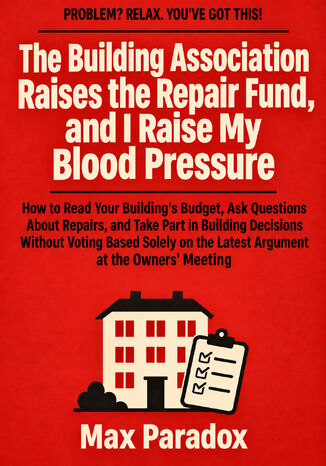
The Building Association Raises the Repair Fund, and I Raise My Blood Pressure — How to Read Your Building's Budget, Ask Questions About Repairs, and Take Part in Building Decisions Without Voting Based Solely on the Latest Argument at the Owners' Meeting Max Paradox
- Autor:
- Max Paradox
- Wydawnictwo:
- self publisher
- Ocena:
- Stron:
- 194
- Dostępne formaty:
-
PDFePub
-
 Publikacja stworzona ze wsparciem AI
Opis
książki
:
The Building Association Raises the Repair Fund, and I Raise My Blood Pressure — How to Read Your Building's Budget, Ask Questions About Repairs, and Take Part in Building Decisions Without Voting Based Solely on the Latest Argument at the Owners' Meeting
You bought an apartment. Congratulations! You now own a comfortable place to live, a share of the building's responsibilities, and an impressive collection of financial decisions you never expected to care about.
The roof needs repairs. The monthly charges are increasing. The building manager has sent another email beginning with "Following a comprehensive assessment." And somewhere downstairs, a neighbor is preparing a forty-minute speech about why the previous committee ruined everything.
Welcome to shared property ownership, where even a perfectly ordinary maintenance proposal can develop into an international diplomatic incident.
The Building Association Raises the Repair Fund, and I Raise My Blood Pressure is a practical, sharply observant, and genuinely funny guide to understanding the finances and decisions behind apartment buildings, condominium associations, and other shared-property arrangements.
Max Paradox takes readers behind the intimidating spreadsheets, mysterious management fees, and emotionally exhausting owners' meetings to explain what really deserves their attention.
You'll learn how to distinguish routine operating expenses from repair reserves, understand why monthly charges increase, and calculate what a proposed contribution means for your own finances. You'll discover how to compare a budget with actual expenditure, recognize financial warning signs, and ask meaningful questions when explanations are incomplete.
The book also explores what happens when the building needs substantial work. How do you compare contractor quotations that appear to describe completely different projects? Why can the cheapest bid become the most expensive? What should owners know about renovation schedules, unexpected additional costs, and checking that the agreed work was actually completed?
And then there are the people.
The neighbor who knows everything but has read nothing. The residents' messaging group that transforms an innocent notice into a financial conspiracy. The committee that communicates exclusively through phrases such as "the matter remains under consideration." And the owners' meeting where a simple vote somehow becomes a historical investigation into seventeen years of communal grievances.
Behind the humor are practical ways to examine documents, communicate with building managers, turn complaints into workable proposals, participate in decisions, and respond when the majority chooses something you opposed.
The guide also tackles more difficult situations, including unpaid owner contributions, emergency repairs when reserves are insufficient, and long-running disputes that have destroyed confidence in management.
Most importantly, it shows how to remain informed without becoming the building's unpaid administrator. You don't need to inspect every invoice, win every argument, or spend your weekends investigating the communal plumbing. You need to recognize what matters, understand your options, and act proportionately.
Written for apartment owners who want greater clarity, better decisions, and considerably less unnecessary drama, this book combines useful financial reasoning with the unmistakable comedy of living alongside people who all have different ideas about how a building should operate.
Because responsible ownership shouldn't require a law degree, an accounting qualification, and the emotional endurance of a professional hostage negotiator.
Your building may still raise its repair fund. At least you'll understand why before raising your blood pressure.
This publication was prepared using tools that support the creative process, including artificial intelligence solutions. The final concept, structure and editing are the responsibility of the author.




Szczegóły książki
- ISBN Ebooka:
- 978-83-848-3894-5, 9788384838945
- Data wydania ebooka :
-
2026-11-04
 Data wydania ebooka często jest dniem wprowadzenia tytułu do sprzedaży i może nie być równoznaczna
z datą wydania książki papierowej. Dodatkowe informacje możesz znaleźć w darmowym fragmencie.
Jeśli masz wątpliwości skontaktuj się z nami [email protected].
- Język publikacji:
- angielski
- Rozmiar pliku Pdf:
- 1.3MB
- Rozmiar pliku ePub:
- 1.8MB
- Pobierz przykładowy rozdział PDF »
- Pobierz przykładowy rozdział EPUB »

Dzięki opcji "Druk na żądanie" do sprzedaży wracają tytuły Grupy Helion, które cieszyły sie dużym zainteresowaniem, a których nakład został wyprzedany.
Dla naszych Czytelników wydrukowaliśmy dodatkową pulę egzemplarzy w technice druku cyfrowego.
Co powinieneś wiedzieć o usłudze "Druk na żądanie":
- usługa obejmuje tylko widoczną poniżej listę tytułów, którą na bieżąco aktualizujemy;
- cena książki może być wyższa od początkowej ceny detalicznej, co jest spowodowane kosztami druku cyfrowego (wyższymi niż koszty tradycyjnego druku offsetowego). Obowiązująca cena jest zawsze podawana na stronie WWW książki;
- zawartość książki wraz z dodatkami (płyta CD, DVD) odpowiada jej pierwotnemu wydaniu i jest w pełni komplementarna;
- usługa nie obejmuje książek w kolorze.
Masz pytanie o konkretny tytuł? Napisz do nas: [email protected]
Książka drukowana


Oceny i opinie klientów: The Building Association Raises the Repair Fund, and I Raise My Blood Pressure — How to Read Your Building's Budget, Ask Questions About Repairs, and Take Part in Building Decisions Without Voting Based Solely on the Latest Argument at the Owners' Meeting Max Paradox
(0)